
The Gateways Project
Project Overview
For 28 years, the Everett Program has been redefining what it means to learn and lead at UCSC. By placing students at the center of program governance, project leadership, and community engagement, Everett transforms the university into a launchpad for meaningful social change.
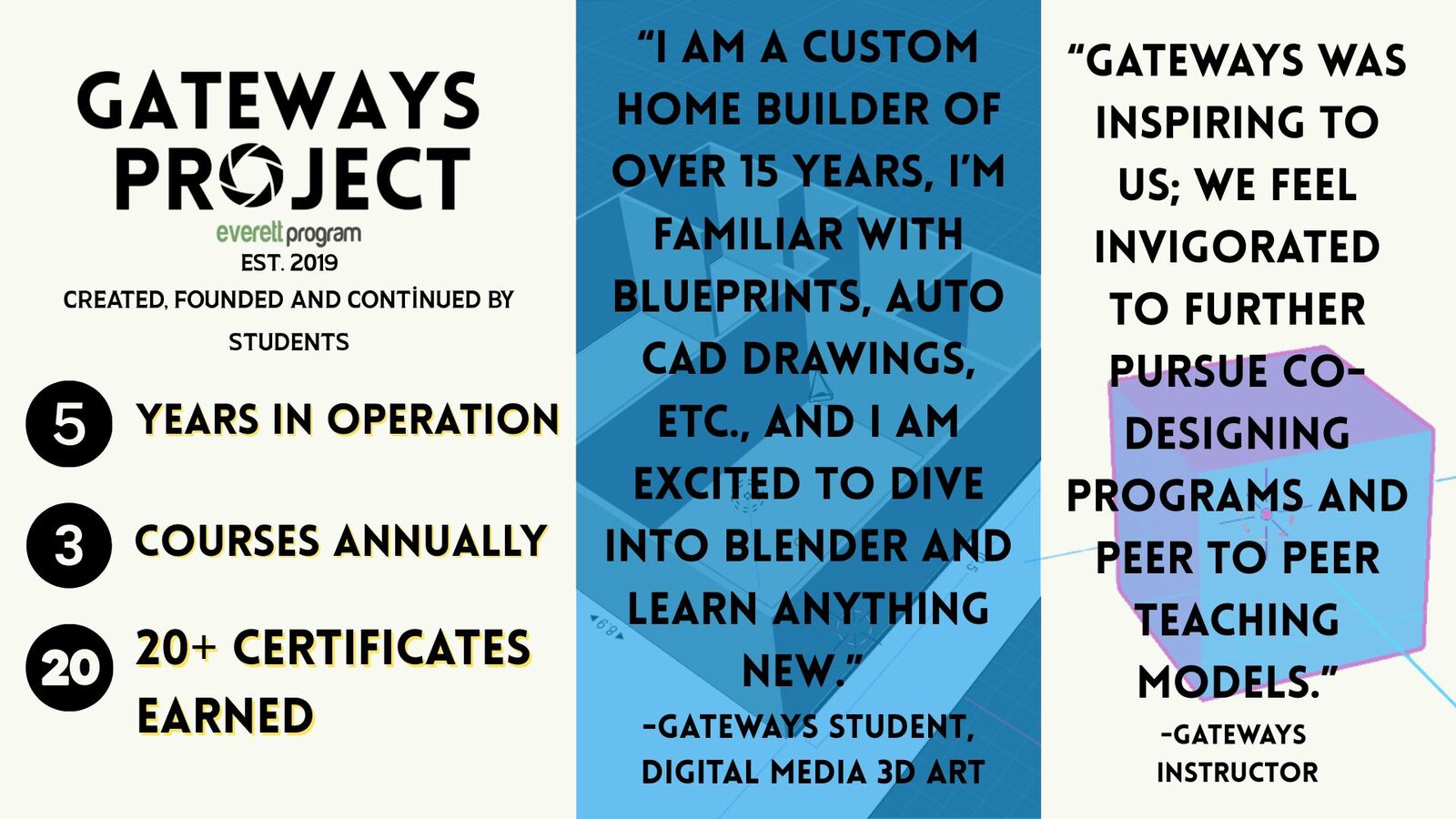
The Gateways Project, launched in 2019 by student leaders in Everett, is a peer-to-peer initiative that creates collaborative learning between UCSC undergraduates and incarcerated students at Santa Cruz County jails. With the mentorship of the Everett Program Fellowship and staff, teams of UCSC students design and lead a three-course series at the Rountree Men’s Jail Facility in Watsonville.
Through Gateways classes, incarcerated students learn skills in computing, digital media, and 3D design, focusing on practical tools that support employment upon reentry while providing space for creative expression. Gateways’ undergraduate instructors, in turn, gain hands-on experience in abolitionist pedagogy, community engagement, and curriculum design. Together, they develop their portfolios, work with cutting-edge and open-source software, and strengthen community connections by engaging in learning that is based on mutual respect and grounded in shared experiences.
By giving to Gateways and the Everett Program, you’re investing in a future where students drive change, communities lead the way, and technology serves justice—not the other way around.
Donation Impact
Giving Day donations will directly sustain the Gateways Project as funds for curriculum development, transportation, and tech access, and may also support related program needs such as graduate student leadership, equipment infrastructure, and Everett Fellowship operations that keep this work evolving.
Funds Breakdown
Jail Programming
Course Equipment
- Digital art and computing software subscriptions and add-ons
- Course equipment maintenance (ex., laptop repair)
- Mice, keyboards, drawing pads, and styluses
Instructor Support
- Transportation expenses for instructors and equipment
- Jail clearance expenses (Livescan)
- Professional development and education training opportunities for instructors
General
- Other Gateways and anti-recidivism projects (click here for more info!)
- Supporting Everett growth and community partnerships
- Supporting funding of student projects
- Technological resources
Jail Courses
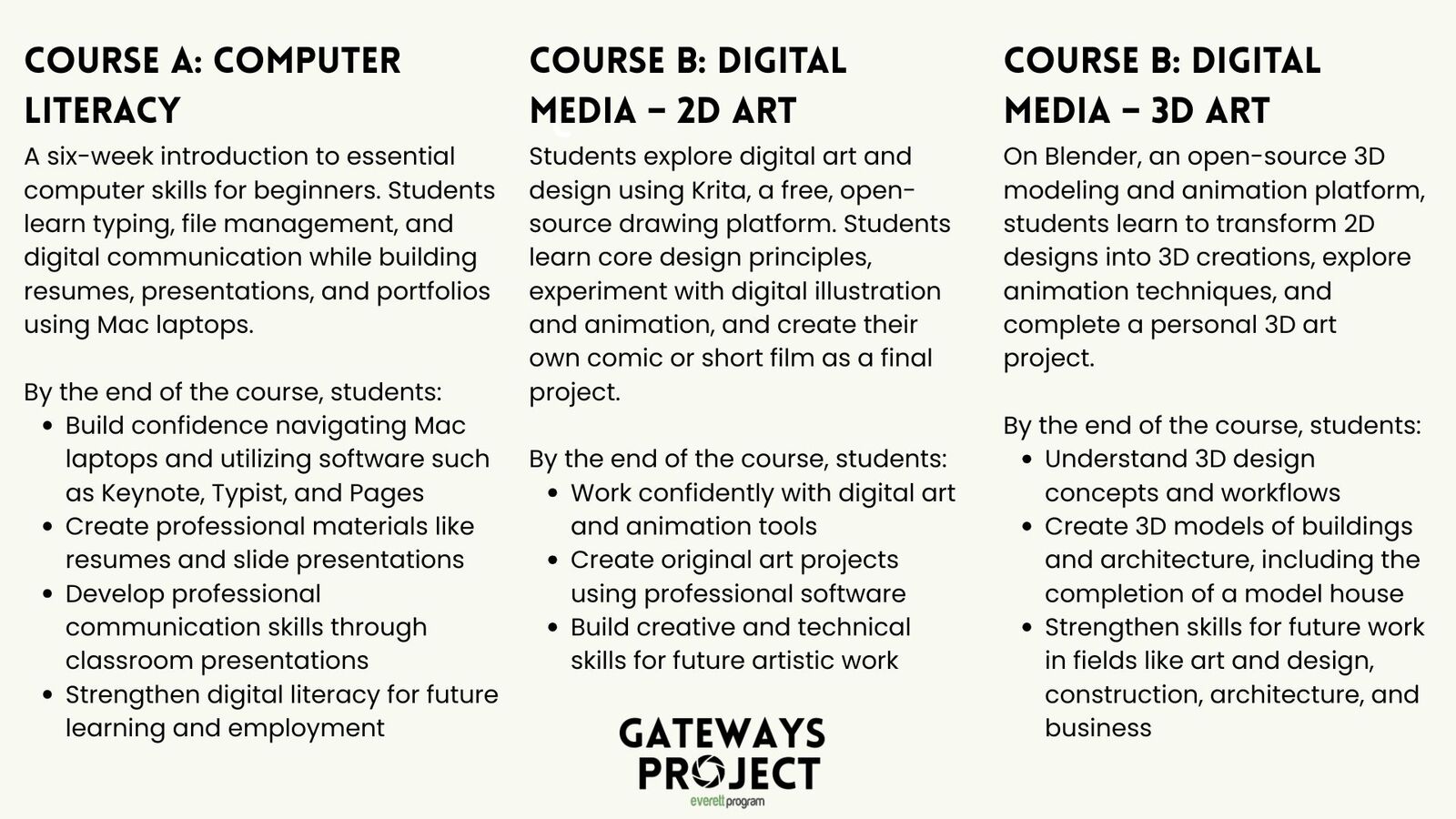
Each year, UCSC undergraduates in the Everett Program design and teach an annual sequence of three six-week courses at Santa Cruz County’s Rountree Facility—a medium-security men’s facility in Watsonville, California. These courses are dedicated to rehabilitation and reentry support through year-round programming. Through the Gateways Project, the Everett Program offers courses at Rountree that span three academic quarters (winter, spring, and summer).
Inside the classroom, each student is assigned a Mac laptop for their individual use throughout the course, providing rare and meaningful access to technology in a jail setting. Few correctional facilities in California offer this level of digital access. Gateways courses follow a scaffolded curriculum that builds computer literacy and expands participants’ experience with industry-standard software through hands-on projects. By bringing laptops and creative software directly into the classroom, the program creates space for collaboration, self-expression, and shared learning between UCSC and incarcerated students.
For instance, this year, Gateways instructors chose to teach Blendr, a 3D visualization tool, because it simultaneously allows students to envision future lives post-incarceration, and it's directly applicable to industries across construction, media design, and urban planning—all career directions that students within Rountree had interest or previous experience with. Other groups have collaborated on documentary films with formerly incarcerated filmmakers, created digital storymaps of racial injustice in Santa Cruz, and audio-engineered wiith the Anti-Recidivism Coalition.
Impact
2024-25 Jail Course Curriculum
About the Everett Program
Everett connects student leaders with local and global community partners, giving them the chance to design and implement real-world projects using technology as a tool for social justice. Through this hands-on approach, students put theory into action, develop leadership skills, and create original projects with tangible impact.
Our peer-to-peer learning model amplifies this impact. In Digital Justice Studies courses and the Everett Undergraduate Fellowship, Everett students lead conversations on pressing social issues, host workshops, and guide digital technology labs, creating spaces for critical inquiry and shared knowledge.
Hundreds of Everett students and alumni have gained diverse skills in collaboration, project design, and reflective practice, contributing alongside community partners to build new futures using digital technologies.
