Gifts to Youth Suicide Research Consortium Conference contribute to...
Youth suicidal behaviors are a public health crisis. Nationally, about 1 in 4 high school students report thinking about suicide in a given year, while about 1 in 10 high school students report attempting suicide (CDC, 2024). In New York City, rates of suicide ideation and attempts mirror national rates, with Black and Latino students reporting higher rates than their non-Hispanic white peers, and LGBTQ+ students reporting substantially higher rates than their heterosexual peers (Stratton et al., 2025).
The YSRC, co-founded by Hunter College Professor Regina Miranda and colleagues, was launched in January of 2019 to respond to this national public health crisis. We are an interdisciplinary network of researchers dedicated to the study of youth suicidal behavior among diverse populations (i.e., diversity based on race, ethnicity, socioeconomic status, gender, sexual orientation, and ability), with an emphasis on understanding and decreasing disparities.
Recognizing that contemporary models of suicide have relied on research with adult populations, despite a higher onset and growing prevalence of suicidal behavior in adolescence and emerging adulthood, our first goal has been to leverage our collective expertise to improve research on youth suicidal behavior, suicide prevention, suicide postvention, and treatment. Furthermore, the increasing diversity of the US population, particularly among youth, suggests a pressing need for theories and research that address issues of diversity. Thus, our second goal has been to increase research on suicide among underrepresented populations of youth by fostering multilevel and cross-disciplinary conceptualizations of youth suicide and self-harm in the United States. Third, we have sought to empower researchers from a variety of backgrounds and disciplines to advance in their careers by mentoring aspiring and junior researchers interested in the study of youth suicidal behavior. Finally, we want to disseminate what we know, partner with, and learn from families, teachers, clinicians, youth, and other community members who are not researchers or academics but for whom suicidal behaviors are of concern. It is in the spirit of these goals that we are organizing our Sixth National Conference, first in-person conference. Registration for the conference will be free, in keeping with our focus on accessibility and bridging gaps across sectors and disciplines.
Since launching, we have grown to a network of over 90 members representing over 60 institutions in the United States. We have held a total of 5 virtual conferences – 4 national conferences and 1 international, we published the Handbook of Youth Suicide Prevention, we collaborated on seminal papers on youth suicide prevention, and we have served as advisors to the New York City Department of Health and Mental Hygiene’s BIPOC Youth Suicide Prevention initiative.
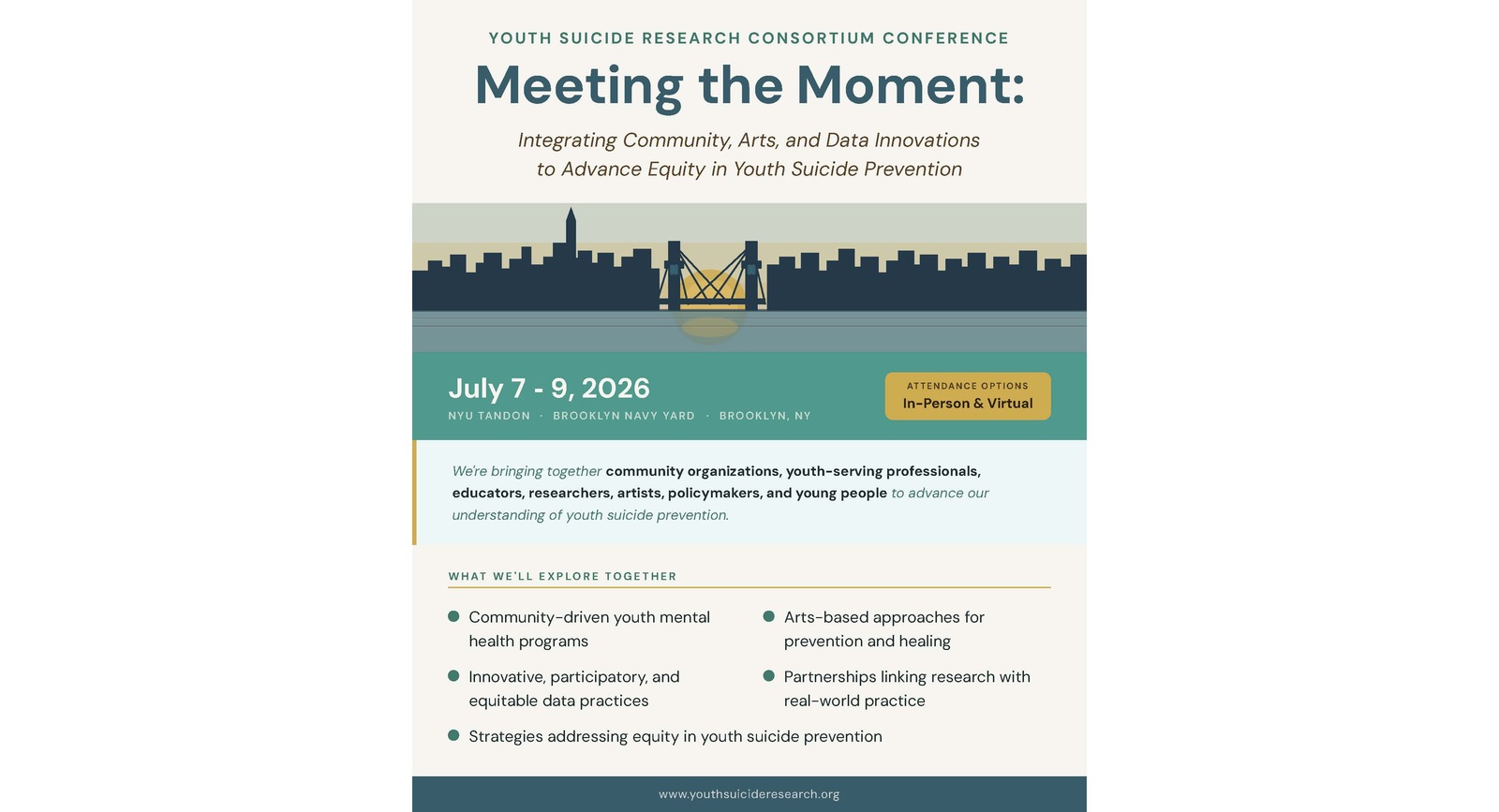
Our first in-person conference “Meeting the Moment: Integrating Community, Arts, and Data Innovations to Advance Equity in Youth Suicide Prevention,” co-chaired by Dr. Lillian Polanco-Roman from NYU and Dr. Carolina Vélez-Grau from Boston College), will be held at NYU’s Tandon School of Engineering (at Tandon @ The Yard), July 7-9, 2026. This two-and-a-half-day event connects researchers affiliated with the YSRC with clinicians, government, and community organizations serving youth with suicidal behaviors or at risk of suicide from diverse populations. While many costs associated with the conference are covered (including the space costs), there are several key needs that can be addressed with your support. The first is support for travel awards for students and for researchers who would not otherwise be able to afford to attend the conference. The second involves catering to provide breakfast and lunch during the conference. The third involves the cost of program design and printing. The fourth involves honoraria for speakers in critical priority areas.
Thank you for your support of this important initiative at Hunter.
Donors
View All Donors